Please read text!
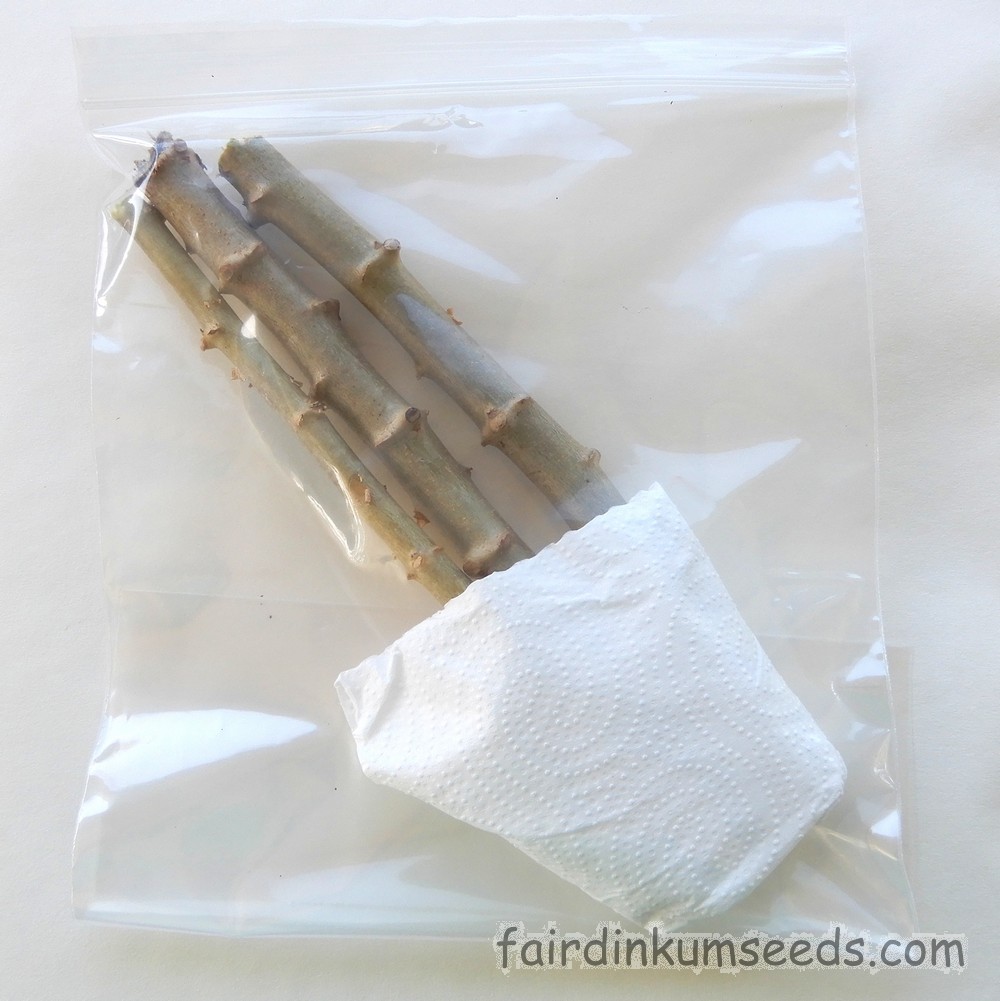
Yellow Manihot Cassava Cuttings
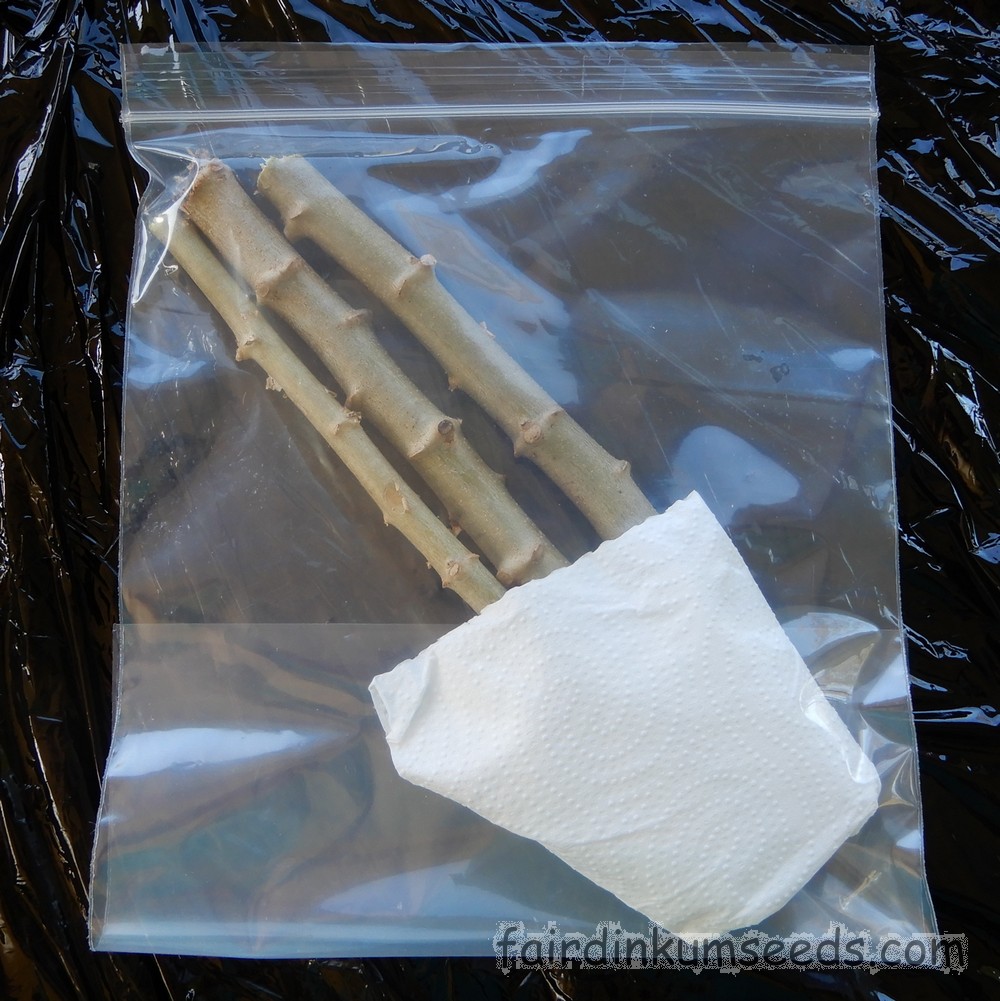
Packet of 3 strong viable cuttings ready to plant!
This super productive and hardy root crop is a must have I reckon.
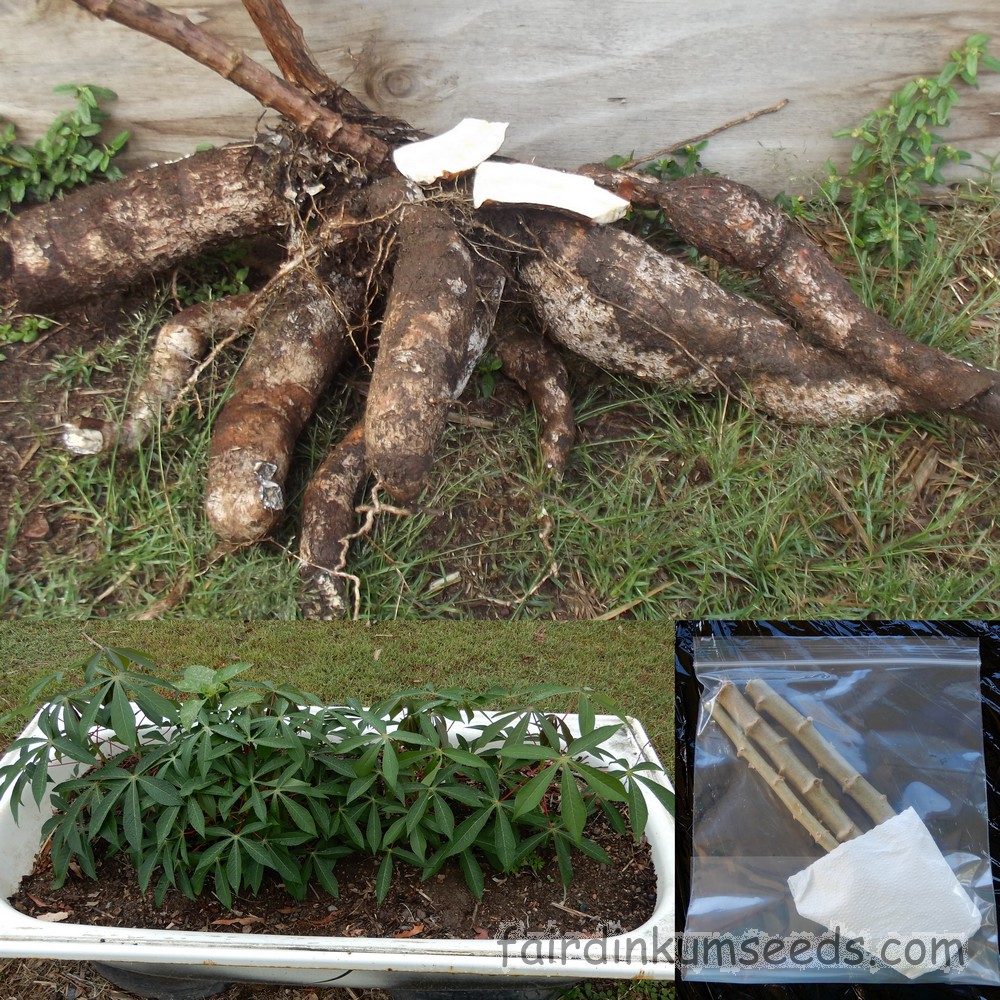
It has cool looking leaves with nobbled notchy stems, and hidden underneath is an abundance of starchy carbohydrate filled tuberous roots.
The whole plant is toxic when raw which helps with prevention of insects and herbivorous pests, while at the same time being delicious when cooked and prepared. Think twice as nutritious potato, but just a little more dry and crumbly instead of waxy.
To cook off all the nasties you just peel it and leave in a pot of water over night.
Next day dump the soaking water, add more and boil it for 20mins. Dump out the cooking water too which has now leached out all the cyanide, then use them like any other vegetable, either roasted, baked, or cooked into a soup stew or curry.
You hardly ever see it available as a vegetable cos once dug up it does not store well, and unlike potatoes or sweet potatoes the roots themselves don’t regrow reliably either explaining why it isn’t commonly available. I used to only ever see it as frozen peeled in Asian supermarkets but that is starting to change now.
It should be grown a heap more cos of its productivity and ease of growth and all you really need to do is stick a cutting in the grow and wait till the stem gets nice and thick, then dig it up. 6-12months is the normal growing time here.
The roots radiate outwards from the central stem and with this domesticated less toxic form they remain long and thin with high starch and very little fibre.
We generally harvest either one whole plant and cook and freeze in servings, or from one small area of a plant, just a couple roots at a time as needed, leaving the rest in place for next time.
Peeled, sliced, soaked, sun dried and powdered root can be used to make flour for cakes, breads and as a thickener, and the leaf can be eaten as a vegetable after boiling and discarding the water apparently but never done that myself. I just use the boiled roots.
Poor soils grow the best roots but are also hardest to dig. Rich soils make cassava grow a heap of leaf matter that can be used to mulch other plants keeping down the insect pests, and every piece of stem can be just shoved in the ground to make a whole new plant.
Grown by us organically, no nasties, no chems, no problems!!!